 Pill
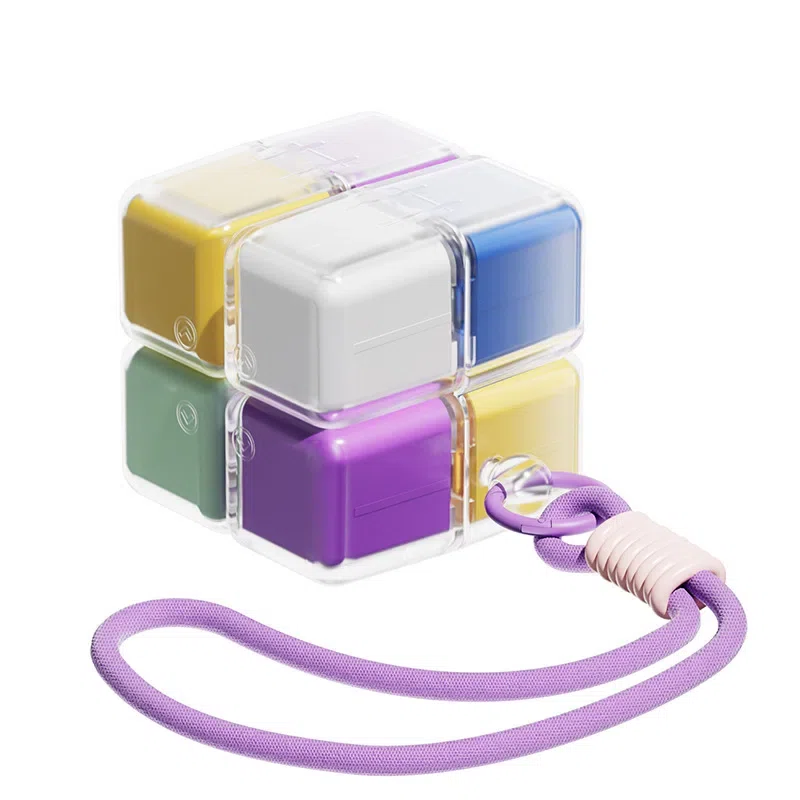
Start with the part that moves
On Item 30, the outer cover turns away from the body. On Item 17, the connected compartments unfold from a cube into a flatter layout. Neither action tells you how each small compartment is accessed. For a retail buyer comparing samples, the useful question is “what does the magnet hold?” rather than “does it have magnets?”
The examples below use the corresponding product photographs, structure illustrations and opening sequences. They describe the visible construction, not a measured closing force or a transport-test result.
A rotating outer cover with magnetic contact points
Item 30’s structure illustration identifies magnetic contact points at the connection between the cover and the body. Its demonstration shows the cover turning around that side connection. Inside, four storage sections have their own flexible covers; the outer-cover motion and the inner-cover motion are separate steps.
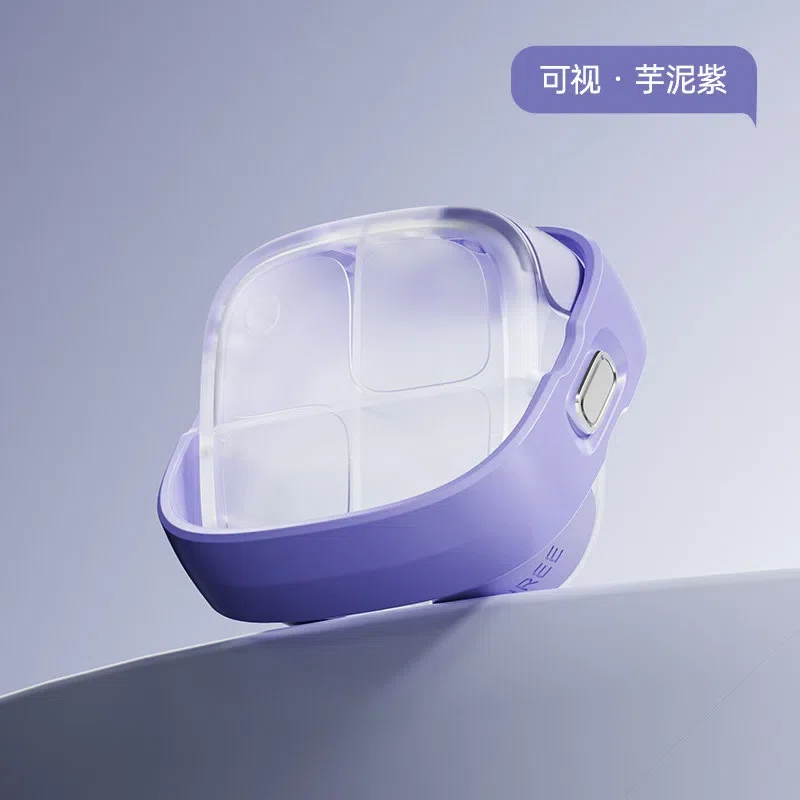
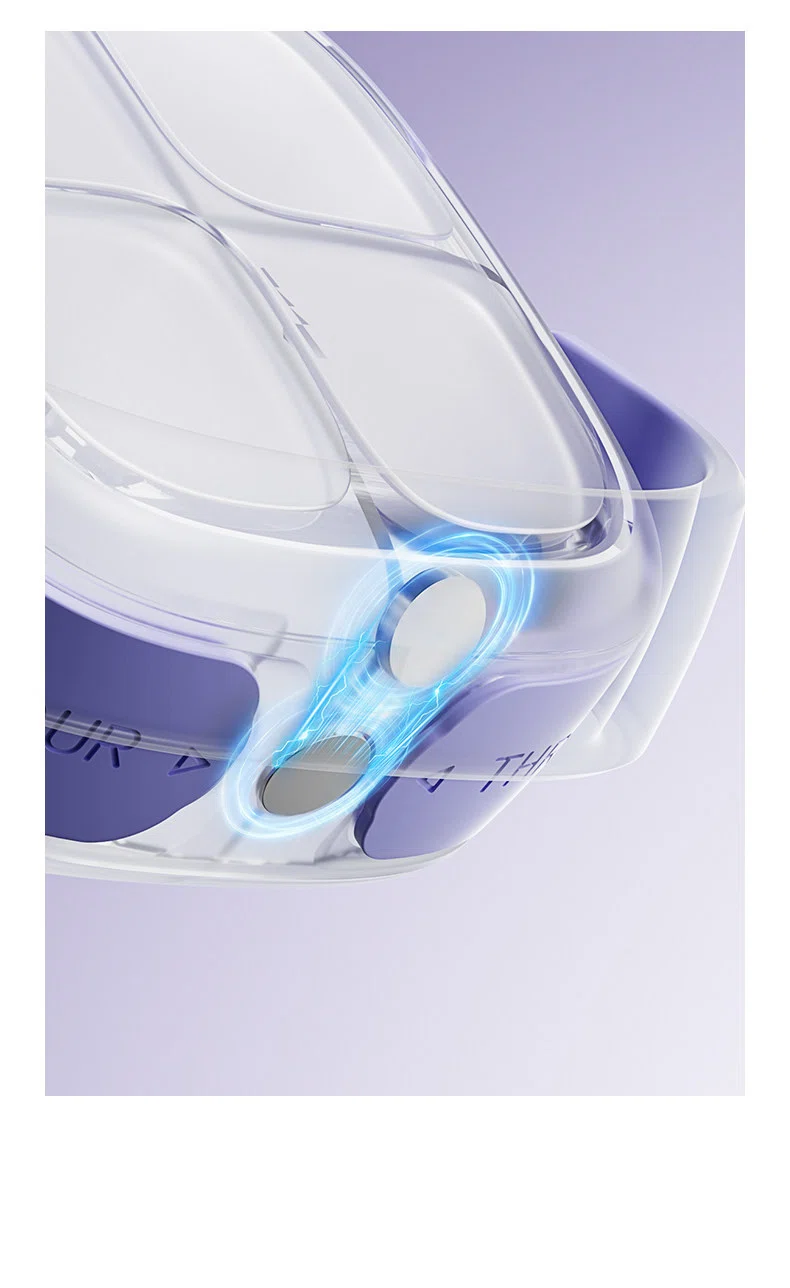
The pictured configuration is PS-30-07, Lavender · Windowed. The opaque lavender configuration is PS-30-08. Both are listed under Item 30, whose catalogue gives outer dimensions of 8 × 8 × 3 cm. “Windowed” describes the chosen version; it is not a different compartment count or a statement about magnetic strength.
When comparing this format, handle the outer cover and the inner covers separately. Note the turning motion, how the outer contact points align, and which inner section becomes accessible. That gives a buyer a reproducible sample observation rather than a vague claim that the case “snaps securely.”
Holding a folded shape is a different job
Item 17 has eight connected compartments arranged into a cube when folded. Its source illustration locates magnets on the folding surfaces, and the opening demonstration shows the body unfolding before individual lids are lifted. Here, magnetic retention concerns the folded body; it should not be confused with a magnetic seal around each compartment.
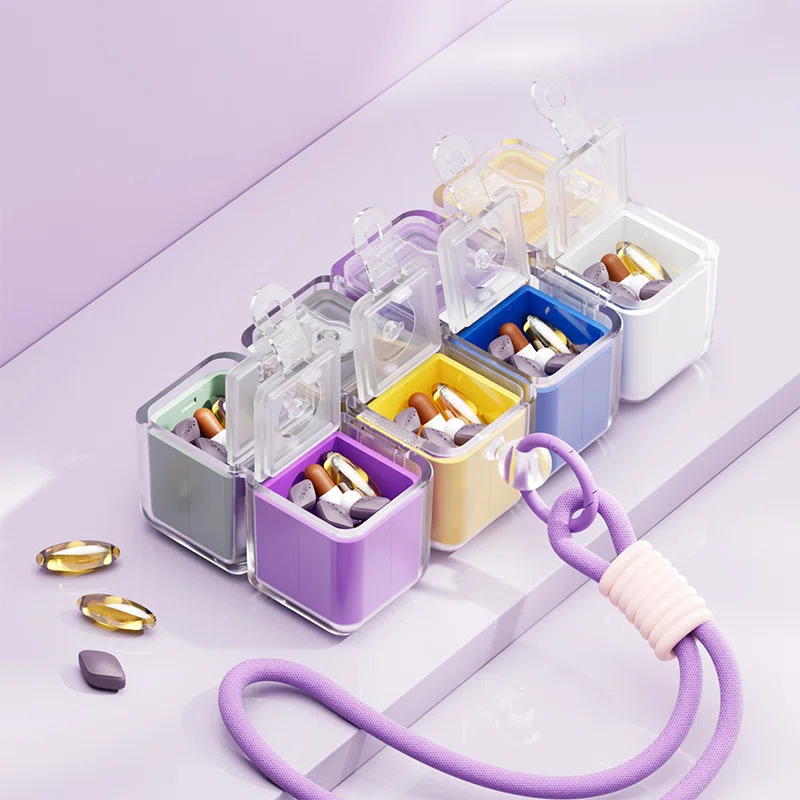
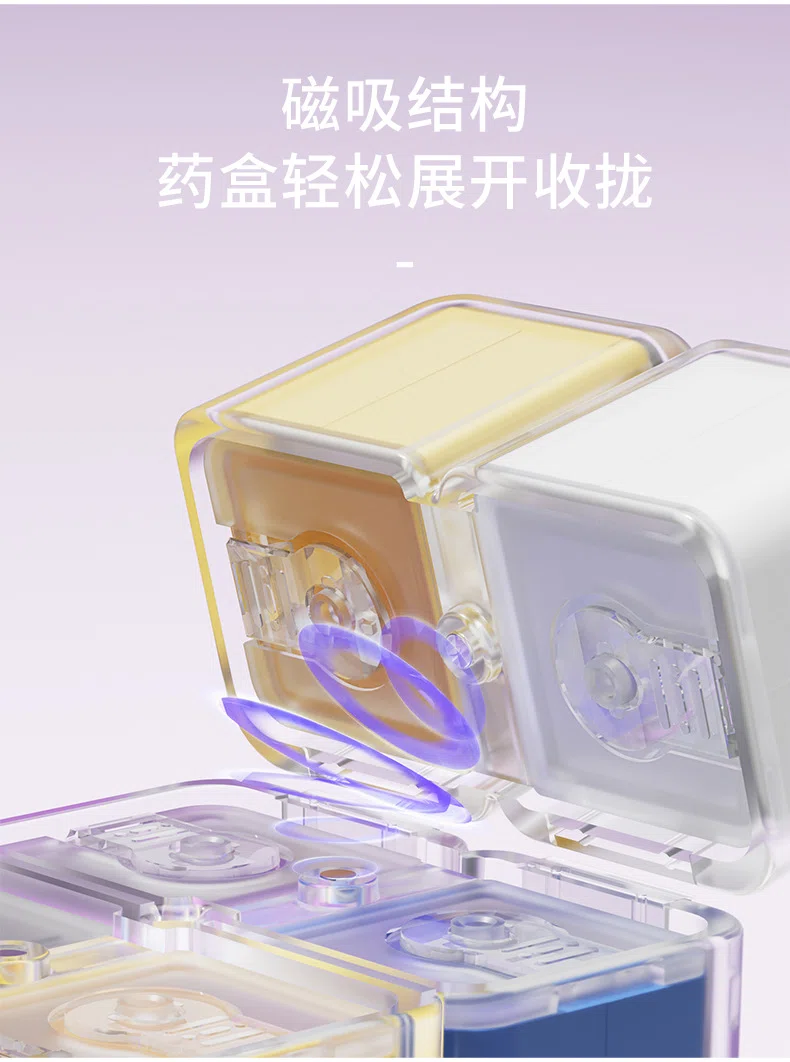
The multicolor example shown is PS-17-01, Multicolor · 8 compartments · With lanyard. PS-17-02 is the multicolor version without a lanyard. The catalogue lists 6 × 6 × 7.3 cm for the folded Item 17 body; it does not provide an unfolded footprint. Do not use the folded measurement to specify the space required while filling the case.
For a sample review, unfold the body first, then identify how each lid is lifted. Refold it with the small lids closed and observe the final alignment. The sequence explains the design without assuming that connected sections can be detached, exchanged or combined with another model.
A “click” does not identify the mechanism
Other brands also use different constructions. Dosey describes a magnetic closure on its Marbled 7-Day Pill Compact. By contrast, Ikigai’s Weekly Case instructions describe a sliding lid and a spring-loaded ball engaging a recess. A click alone is therefore insufficient to identify a magnet. These are descriptions of those brands’ products, not additional PillStow features.
For the PillStow examples here, the support is model-specific: Item 30’s outer-cover contact illustration and turning sequence, and Item 17’s folding-surface illustration and unfolding sequence. No measured pull force, leakproof rating, drop resistance or child-resistance claim is made.
Compare the exact configuration
Send the item number, SKU, expected quantity and destination. If opening effort, an accessory or a particular compartment layout matters to your range, include that requirement. Request a sample of the named version so the photograph, quotation and handling review refer to the same configuration.